
The #1 Killer: Poor Bankroll Management
Most bettors walk into sports betting like they’re walking into a casino with a credit card—and the results are just as predictable. The single biggest mistake? Ignoring proper bankroll sizing. You see it all the time: someone hits a hot streak, feels invincible, then dumps half their stack on a “sure thing” that inevitably loses. It’s not bad luck; it’s bad math. A bettor with a $1,000 bankroll who bets $200 per game has a 50% chance of going broke in just 10 bets. Ten. That’s not gambling—that’s a countdown.
The solution is brutally simple: flat betting with a fixed percentage of your bankroll per wager. Usually 1-5%. Nothing more. Nothing fancy. I once coached a trader who was bleeding cash—betting 10% per play, chasing losses, the whole disaster. He cut his bet size to 2%. Within six weeks he turned a losing season into a profitable one. Not because the picks got better, but because his bankroll stopped getting massacred by variance.
Actionable tip: calculate your unit size by dividing your bankroll by 100. Got a $1,000 bankroll? Your unit is $10. One bet, one unit. That’s your baseline. Stick to it like your wallet depends on it—because it does.
The 1-5% Rule: Your Safety Net
Why is 1-5% the gold standard? Because variance is a relentless beast. You can have the sharpest model in the world and still hit a 10-bet losing streak. With a $1,000 bankroll and a 2% unit size (that’s $20 per bet), a 10-bet skid costs you $200—annoying, but you’re still in the game. Bet 10% and you’re broke. The Kelly Criterion gets thrown around a lot, but pro bettors rarely exceed 3% per bet anyway. So keep it simple: 1-5% is your safety net, your survival kit. This single rule matters more than any pick, system, or gut feeling. Ignore it at your own financial peril.
Why Flat Betting Beats Martingale
Martingale sounds clever on paper: double your bet after a loss, win it all back with one win. In reality, it’s a landmine. Say you start with a $10 base bet. A 5-bet losing streak forces you to bet $320 on the next game—that’s 32% of your entire $1,000 bankroll on one wager. One loss and you’re toast. Flat betting? A flat $20 per bet means your risk per wager never changes. No panic, no chasing. I had a client who lost $5,000 in one weekend using Martingale on NBA underdogs. He thought he was being smart. He wasn’t. Flat betting might feel boring—same bet, same amount, every time—but boring keeps your account alive. And alive means you get to bet another day.
The Emotional Rollercoaster: Chasing Losses
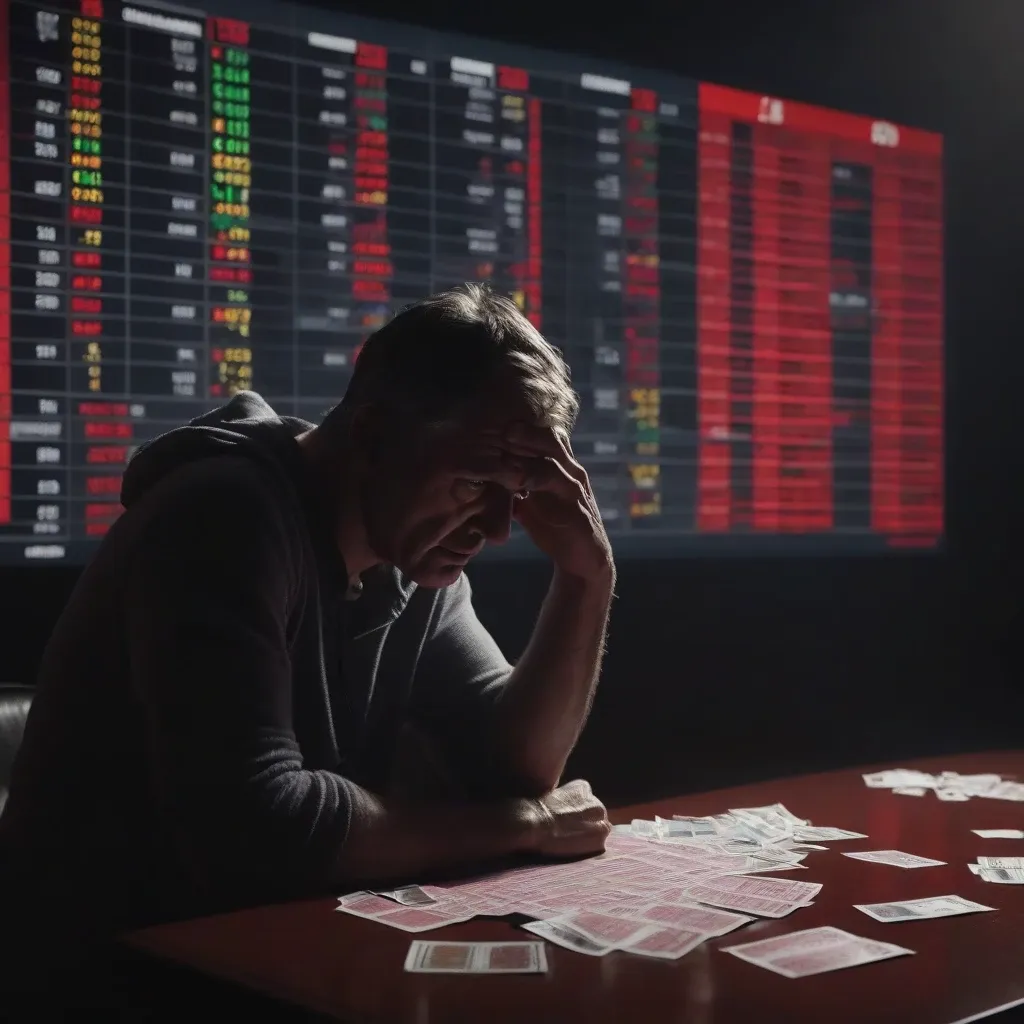
Picture this: you place a confident wager on a big game. The team fumbles, the kicker misses, the clock runs out. Your bet is dead. That sinking feeling hits, and then a dangerous voice whispers: “Double down. Win it back.” That is the chase — and it is the fastest way to empty a bankroll. Emotional betting, especially after a loss, turns logic into smoke. You stop reading spreads, stop checking injury reports, and start clicking “place bet” like it’s a slot machine lever. The numbers back it up: bettors who chase losses are three times more likely to finish a month in the red. In poker, they call this tilt — a state of emotional frustration where good decisions go out the window. The same thing happens here. Take one real scenario: a gambler lost his first Super Bowl wager, then — in a fit of desperation — slapped the entire remaining bankroll into a second-half parlay. That one impulsive click took months to recover from. It’s a classic mistake, and it happens every Sunday.
So how do you stop it? First, set a daily loss limit and respect it like a law. Second, enforce a 24-hour cooling-off period after any losing day — no bets, no refund chasing, no “one more look.” Third, never place a bet when you are angry, frustrated, or riding that high of near-victory. The discipline to walk away is the only antidote to the emotional spiral. Before you chase, remember: the house doesn’t care about your bad beat. It just collects the next mistake.
The Psychology of the Tilt
Tilt isn’t just a poker term — it’s a biological hijack. After a painful loss, the brain’s fight-or-flight response kicks in. Adrenaline surges, decision-making shortcuts replace careful analysis, and suddenly you feel invincible. Example: a bettor watches a last-second field goal sail wide, losing a cover by inches. Instead of stepping back, they immediately fire a revenge bet on the next game, convinced the universe “owes” them a win. This is the gambler’s fallacy in action — the false belief that a loss must be followed by a winner. In reality, each event is independent, and emotional betting only compounds the damage. The fix? A simple mindfulness check. When you notice your heart racing or your thumb tapping the “place bet” button faster than normal, stop. Step away for ten full minutes. Walk around, breathe, let the chemicals settle. Tilt thrives on speed; discipline kills it with a pause.
How to Build Emotional Discipline
Emotional discipline isn’t born — it’s built with rules. Before every bet, run through a quick checklist: Is this a rational pick, or am I trying to recover a loss? Does the unit size match my plan? Am I betting based on data or desperation? One simple technique is a stop-loss limit — if you lose three units in a single day, shut down the app entirely. No exceptions. A pro bettor I know sets a five-minute alarm after every wager; he forces himself to wait before placing another, breaking the impulse loop. Another powerful tool: keep a journal. Write down not just the bet and outcome, but how you felt when you placed it. Over time, patterns emerge — the anger bets, the frustration parlays. Seeing those entries in black and white makes it harder to ignore. The goal is not to eliminate emotion, but to keep it from driving the car. Rules and reflection turn the emotional rollercoaster into a straight, boring, profitable track.
No Plan, No Profit: Betting Without a Strategy
The average recreational bettor treats sports wagering like a lottery—throwing money at a favorite team, a stranger’s hot tip, or a gut feeling that just won’t quit. This random approach is the fastest way to drain a bankroll. A 2019 analysis of 10,000 bettors revealed something brutal: those who followed a documented, systematic strategy earned a 12% higher ROI than the chaos crew. Betting isn’t about picking winners; it’s about finding positive expected value (+EV). Think of it like throwing darts at a board blindfolded—sure, you might hit a bullseye now and then, but a system narrows the board to a single, profitable zone. Every wager needs a betting thesis—a clear, written rationale that explains why this bet carries an edge. For example, a systematic approach to NFL games might grade teams on five factors: yards per play differential, turnover margin, third-down conversion rate, home-field advantage adjusted for travel, and recent form over the last four games. The bettor only pulls the trigger when the model shows at least a 5% edge over the market odds. No thesis, no bet. That discipline transforms gambling into calculated risk-taking.
The Myth of the ‘Sure Thing’
The “lock of the week” mentality is a dangerous illusion. In the 2023 NFL season, 71% of favorites covered the spread—but that still leaves 29% of “sure things” slamming into the ground. Sharps don’t bet on certainty; they bet on probability over hundreds of trials. A new bettor once begged for a 100% lock. No such thing exists. Even the best predictive models land around 60% accuracy. A strategy doesn’t eliminate losses—it capitalizes on edges across a long series of bets. The illusion of a sure thing is just favorite bias dressed up in confidence.
Creating a Data-Driven Approach
Building a simple handicapping model isn’t rocket science. Start by comparing Team A’s offensive rating to Team B’s defensive rating, factor in home-court advantage, and check recent form over the last five games. Free raw data sits on sites like TeamRankings or Sports Reference—no need for paid subscriptions. One bettor tracked 500 MLB wagers using a basic run differential model and hit a 53% win rate. That’s enough to turn a profit when combined with the right odds (typically +100 or better). The key: test the model on historical data, tweak the inputs, and never stop refining. A static system is a dead system.
The Value Blind Spot: Betting on Favorites and Ignoring Odds
Most casual bettors chase big names and flashy matchups. They hammer the Cowboys because the logo sells, not because the number makes sense. That’s the favorite bias — and it’s a leaky pipe for your bankroll. When the public piles onto a popular team, the sportsbook adjusts the line to balance action, inflating the price beyond true probability. Sharp money moves in the opposite direction, hunting for mispriced lines where the implied probability doesn’t match reality.
Take a concrete example. If the Cowboys are listed at -200, the implied win probability is 66.7%. You calculate that: 200 ÷ (200 + 100) × 100 = 66.7%. Now, suppose you believe Dallas actually has only a 60% chance to win. That’s negative expected value (-EV) — the bet costs you money over time. You’re paying for a 66.7% chance when reality says 60%. Run from that.
Here’s some hard data. In a 2022 study of NBA betting, bets on underdogs delivered a better return on investment than favorites over a full season. The public’s love for the chalk creates a persistent value gap. One sharp bettor once placed a wager against the heavily favored Lakers on a back-to-back night — the line was inflated by public hype, and the underdog covered easily. That’s the payoff for ignoring the glare of the spotlight.
Line shopping is your antidote. Opening two accounts at different books can yield an extra 1-2% return on investment. It sounds small, but compounded over hundreds of bets, that edge separates winners from hobbyists. Don’t let the blind spot eat your bankroll.
Understanding Implied Probability
Implied probability is the percentage chance the sportsbook’s odds assign to an outcome. Convert it yourself with a simple formula. For American odds on a favorite: (negative odds) / (negative odds + 100) × 100. So -150 becomes 150 ÷ (150 + 100) × 100 = 60%. For underdogs: 100 / (positive odds + 100) × 100. So +200 becomes 100 ÷ (200 + 100) × 100 = 33.3%.
Now compare that to your own estimated probability. If a bettor calculates the team has a 55% chance, but the line implies 60%, that’s an auto-skip. The numbers don’t lie. A good habit is to use a free odds converter tool — there are several online — to quickly crunch these percentages before you click “place bet.” It keeps your decisions based on math, not emotion.
Line Shopping: The Free Money
Line shopping is the easiest way to squeeze profit without handicapping a single game. Think of it this way: if one book has -110 on a side and another has -105, the second saves you 5 cents on every dollar you risk. Over 1,000 bets, a five-cent difference in odds can mean an extra $500 in profit on a $10,000 total stake. That’s not chump change.
Many sharp bettors maintain accounts at six different books and habitually check the line before placing any wager. It’s a discipline, not a chore. Tools like OddsJam or BettingPros aggregate lines across sportsbooks — use them to spot the best number instantly. The difference between -110 and -105 might seem small in one bet, but across a season, it’s the gap between losing money and actually building a positive edge.